

20 Proven Strategies to Reduce Customer Churn Rate
- March 10, 2026
- 30 mins read
- Listen
Did you know that focusing more on customer acquisition than on customer retention is one of the costliest mistakes made by SaaS and eCommerce businesses today?
In fact, such businesses are estimated to lose around $1.6 trillion per year due to customer churn. Here’s proof that customer retention is the main source of revenue for most companies:
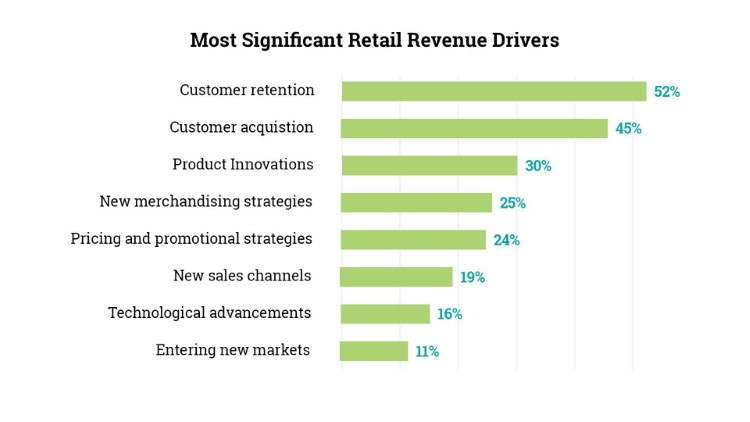
Hence, having a solid retention strategy in place and reduced customer churn rates can give an immense boost to your ROI.
Customer retention overcomes all these challenges as it focuses more on nurturing your present customers by designing personalized content, offering the best customer service, and providing ongoing value.
So, let’s find out what is churn rate and how can you effectively reduce customer churn rate.
What is customer churn rate?
Customer churn rate, also known as the rate of attrition, is defined as the percentage of customers who discontinue their subscription (product or service) within a certain time frame.
Customer churn rate is vital to understand the health of your business and how important it is to solve customers’ problems.
It can be calculated by dividing the number of lost customers by the total number of customers at the beginning of the time frame.
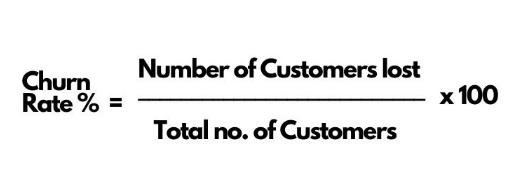
For example, if you had 600 customers at the beginning of the quarter, and by the end of the quarter you lost 30 of them, then your customer churn rate would be 5%.
Reducing customer churn rate is one of the most crucial metrics to be followed while evaluating your customer retention strategy.
It can give you eye-opening insights about your customer nurturing strategies and also about the overall experience you are providing to your customers.
Types of churn
There are many types of churn businesses might analyze. Each offers unique insights and reflects various use scenarios. Here are a few common types of churn:
Customer churn: This is the most obvious type of churn, and it shows the percentage of customers who leave doing business with a company within a certain time period. Subscription-based businesses, such as streaming platforms and SaaS companies, generally focus on customer churn.
Revenue churn: This quantifies the loss of revenue from existing customers, either because they reduced their plans or terminated their contracts. Businesses that use tiered pricing structures frequently monitor revenue churn.
Gross churn vs. net churn
- Gross churn: This measure only accounts for lost revenue or customers; it does not take into account any gains from current clients.
- Net churn: This allows for upsells or increased purchases by existing clients, while overall losses are. Businesses seeking a more comprehensive knowledge of consumer behavior often use net churn.
Voluntary vs. involuntary churn
- Voluntary churn: Voluntary churn is when customers choose to stop their engagement with a provider and cancel a membership intentionally.
- Involuntary churn: With involuntary churn, the client doesn’t initiate the termination; instead, the cause is payment failure or a comparable factor. Subscription services and e-commerce sites frequently distinguish between voluntary and involuntary churn.
Active vs. passive churn
- Active churn: Also referred to as voluntary churn, this occurs when a client chooses to stop using a service, usually by canceling a subscription.
- Passive churn: Also known as involuntary churn, this happens when a customer’s account is deleted due to inactivity or failure to update payment information.
User churn: App-based businesses and freemium models commonly track user churn since it focuses on the number of users that stop using an app or service, regardless of whether or not they were paying customers.
Product churn: In industries such as retail or consumer products, product churn refers to the end of a specific product, rather than the loss of a client.
Contractual vs. noncontractual churn
- Contractual churn: For industries in which customers and firms sign contracts for a set term, contractual churn refers to customers who choose not to renew their contracts.
- Noncontractual churn: In industries without contracts, such as retail, this refers to customers who have not made a purchase in a particular time frame.
Early churn: Some companies with long customer onboarding procedures pay attention to early churn, which indicates customers who leave immediately after joining, as this could signal issues with the onboarding process.
Why is customer churn rate important?
Do you know that just a 5% reduction can increase your profitability by up to 25%?
Hence, measuring churn rate metrics and preventing customer attrition should be one of your top priorities. But for effectively reducing your SaaS or eCommerce customer churn, it is important to understand the underlying root cause.
So, before understanding how to avoid churn, it is important to understand why customer attrition happens.
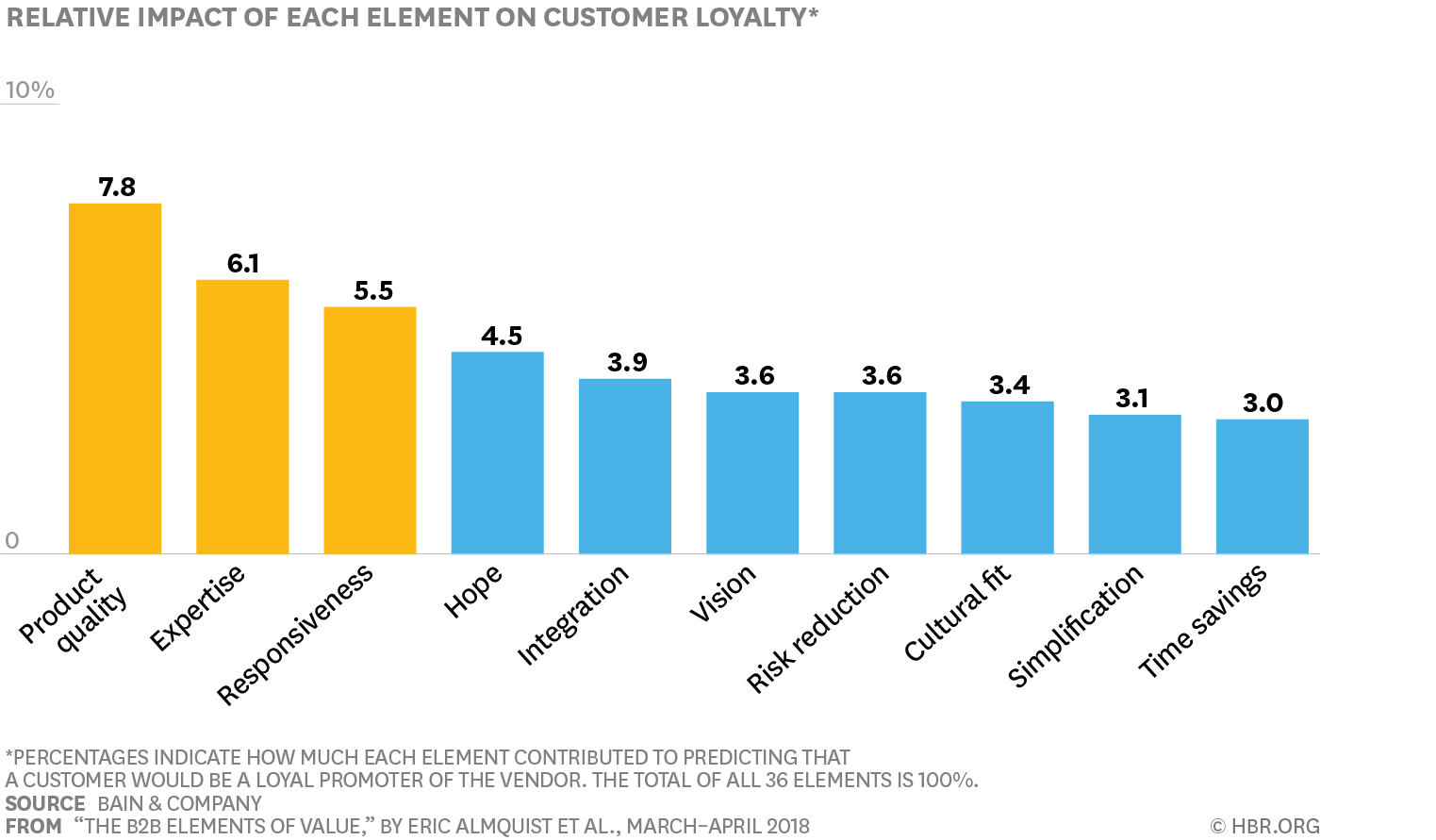
Here are a few of the top reasons why customer churn can happen are as follows:
Poor client onboarding strategy and user experience
Are you facing customer attrition within a few days of sign-ups? This may be because of your shaky onboarding process and inadequate user experience.
If your customers fail to see the value of your product/service or find it not-so-user-friendly, then they are bound to abandon you within a few days, which is why a poor onboarding experience is another major contributor to increased customer attrition rates.
Low-quality product
This is a no-brainer. A poor quality product will kill your customers’ expectations and permanently drive them away.
Think about it. You put in a lot of money and effort into acquiring new customers for your SaaS business. But if your product lacks quality or fails to match customer expectations, then you won’t be able to prevent customer churn at any cost.
Lack of good customer support
Staying with your customer and supporting them throughout their journey can be a big boost to your profitability. Unfortunately, very few businesses understand the importance of providing high-quality extensive customer support. This is why numerous SaaS and eCommerce businesses are unable to prevent customer churn.
20 Proven strategies to reduce customer churn rate
As it is clear by now that you understand the impact that decreasing customer churn can have on your revenue and brand authority. Here is the quick summary of some actionable churn prevention strategies to effectively reduce customer churn rate:
- Offer the best in class customer support
- Analyze the reasons for customer churn
- Improve your product
- Focus on delivering great customer experience
- Develop a loyalty program to reduce customer churn rate
- Engage with your customers more and more
- Collect customer feedback regularly
- Measure your churn metrics
- Optimize your customer onboarding plan
- Offer a dedicated success manager
- Educate your customers
- Identify at-risk customers
- Build a weekly churn prevention workflow
- Prioritize your most valuable customers
- Close the feedback loop quickly
- Reduce involuntary churn caused by payment issues
- Attract the right customers from the beginning
- Reinforce your value before renewal
- Create a customer community
- Handle cancellation requests as retention conversations
Let us now discuss the strategies to decrease customer churn and retain customers for a lifetime.
#1. Offer the best in class customer support
The essence of a good retention strategy is to provide the best customer service support possible. When you help out your customer and lead them to success, the life-time value of customers gets automatically increased.
A case study on Mention reveals how enhanced customer support and increased communications with customers decreased their churn rate by 22%. This would have led to a multiple fold increase in their revenues. Such is the importance of good customer service.
Gone are the days when just being reactive was enough.
A proactive approach to customer service is the need of the hour which is why all leading businesses are leaning towards this.
Here are a few ways in which you can provide top-notch support to your customers:
- Real-time assistance – Providing an AI live chat to address issues in real time will boost your customer engagement and satisfaction levels. This also changes your brand’s perception in the minds of your customers by making them feel more valued.
- Personalized support – Generic solutions to issues and FAQs can be misleading and might leave your customer confused and lost. Providing personalized customer services can be an easy solution for this and you may provide the same with the use of live-chat and video chat assistance.
- 24/7 Availability – AI chatbots are one of the best and easiest mediums for 24/7 customer assistance. Integrating this with your product will be a huge relief for your customers. You can also use chatbots to assist them in making buying decisions in your favor.
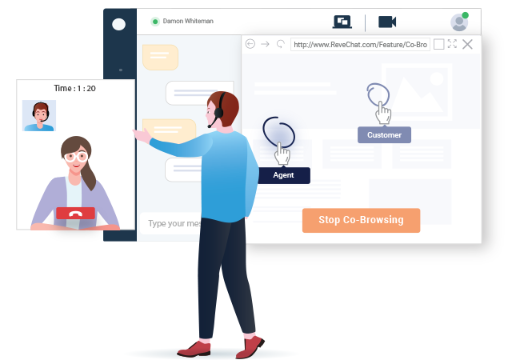
- Collaboration with customers – Co-Browsing is a super-powerful and innovative tool that will get you above mediocrity. Co-browsing software facilitates an easy platform for hassle-free communication and collaboration. You can use this to guide your customers through complex workflows and ease their usability.
#2. Analyze the reasons for customer churn
For handling the problem of increased churn rates, it is crucial to identify why your customers are churning.
Top businesses are able to prevent customer churn, not through wild guesses and trial and error strategies. Instead, they have a thorough analysis of all possible reasons for their customer churn and build a strong retention strategy around these findings.
So, how do you get to know the reasons for customer churn?
- Send personalized exit emails and ask them for the reasons for leaving. Groove followed this exact strategy and reduced its customer churn rate by 71% by sending emails asking their customers for feedback while leaving.
- Interactions with your customers at every touchpoint can help you to get down to the root cause of your customer attrition rate. The best way to go about this is to collect qualitative feedback from your customers through customer interviews and meetings. You can also explore other effective options like live chat for collecting customer feedback in real-time.
- In-app messaging can also help you get accurate customer feedback at the right time. You can push in-app messages to your customers when they are engaged in a process and ask them to pin-point the exact issue. This will help you understand the reason for customer churn in a better way.
#3. Improve your product
At the end of the day, your product quality is what matters the most for retaining your customers. So your product should match or even surpass your customer’s expectations.
For example, many SaaS businesses offer products that lack in features and usability when compared to their competitors. However, as soon as customers find better products in the market, they are bound to leave you.
So, in order to improve product quality, dive deep, and think about what is your key offering or what is your USP. How do you plan to help solve your customers’ problems and what is the unique thing about your product?
After that, you can start with detailed customer segmentation. You may segment your audience based on the following criteria:
- Which industry do they come from
- Based on customer journeys or use cases
- Based on their revenue
- Based on their needs, usage and features required
By segregating your customers in this way, you can improve your product quality and customer retention. Here are a few things you can do:
- Improve product usability by eliminating unwanted complexity from the product. Something that can help with this is to chalk out your ideal customer persona and think about the features that they would want. Update your product based on these features. You give them exactly what they want, and it’s a win-win.
- Fine-tune your product messaging so as to solve all your customers’ pain points.
- Perform market tests and collect feedback from your customers or prospects. Make improvements to your product using this continuous feedback loop.
#4. Focus on delivering great customer experience
Throughout the customer life-time, they are going to have multiple interactions with your brand. Optimizing all these customer touchpoints to provide them with the most pleasant experiences should be your top priority. The moment a customer has an unpleasant experience with your brand, they are going to start looking for better options.
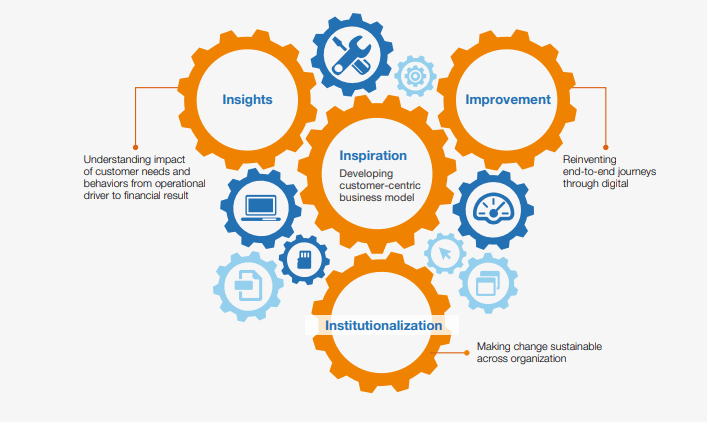
For instance, when Hotjar, a SaaS company, set out to analyze the reasons for their increased customer churn rates, they found that customer experience was one of the main factors. And by improving their customer experience, they were able to reduce customer churn rates drastically. This is why optimizing CX is very crucial for reducing churn.
So, how do you improve the customer experience?
- Personalize their experience in all possible areas like customer support, emails, etc. Replace generic FAQs with much more personalized options such as video-chat and co-browsing.
- Collect customer feedback regularly and remember to take action on every one of them.
- Make the onboarding process as smooth as possible.
- Use analytics to find out the areas where you lack customer experience and continuously improve them.
#5. Develop a loyalty program to reduce customer churn rate
Loyalty programs breed loyal customers and retain them for long.
Such customers have higher lifetime value and they require less work to convert.
Another huge benefit is that such a customer is likely to recommend you to many others and this also helps with customer acquisition.
Here’s how you can develop a loyalty program for reducing churn:
- Understand your customers’ needs and research on which kind of rewards or incentives would they want. Then you can personalize the loyalty program to match the needs of your customers. You can do this by having personalized names for your incentives instead of using “coins” or “points”. Also, use personalized messages in your loyalty programs. Make the program as simple as possible and easily achievable for your customers. This will give them instant gratification and more and more customers would want to participate.
- Gamify your loyalty program to engage your customers even more.
- You can also offer a referral program that will increase your acquisitions as well.
#6. Engage with your customers more and more
Regular interaction with your customers is one of the most effective ways to stop them from churning.
Having a strong customer engagement strategy helps you to catch a potential customer churn even before it happens. By using proactive communication techniques instead of reactive ones will boost real time engagement with customers efficiently.
Here are a few means through which you can engage with your customers more:
- Set up an intuitive and hassle-free onboarding campaign to reduce churns during the initial stages.
- Have an effective email marketing strategy in place to keep ongoing communication easy. Add CTAs in your emails and ask your customers to reply back with any queries, concerns, or suggestions.
- Assure them time and again by making use of 24/7 assistance.
- Let them know the ease of using real-time assistance so that all their issues get resolved quickly and nothing is pending for long from your side.
#7. Collect customer feedback regularly
Collecting consistent customer feedback and analyzing the same is the best way to measure customer satisfaction and identify any room for improvement.
Time is one of the most important factors when it comes to collecting feedback. The best way is to collect real-time feedback through in-app, live-chat, and chatbots.
Collecting feedback in real-time would be a 2-way conversation through which you will be able to collect more detailed feedback. This will, in turn, help you with quicker and more effective problem resolution.
Personalizing this experience will be even more effective as this will lead to more genuine feedback.
#8. Measure your churn metrics
Application of customer retention strategies without measuring churn metrics is a big waste of your time and money. At the end of the day, you will make progress only when you know which measures are working in your favor for reducing churn rate.
In fact, a SaaS metrics survey reported that the customer churn metric was voted as the key metric by 80% of SaaS companies!
These are a few things that you must keep in mind while measuring customer attrition metrics:
- Measure churn metrics for different time frames such as monthly, quarterly or yearly. This will give you a broader perspective.
- Measure and analyze churn metrics separately for different customer segments.
- Analyze how your churn rate is impacting other metrics such as customer lifetime value, recurring revenue, and customer acquisition costs.
- Set attrition rate benchmarks and check if there is an improvement with time. If not, then pivot your retention strategy and test new things out.
#9. Optimize your customer onboarding plan
Most companies face unexpected churn rates during the first few weeks after acquisition. This is probably because of a bad onboarding experience that your customers would have faced.
Here are a few tips to make a good first impression on your customers:
- Make the onboarding as smooth as possible by providing demo videos and in-depth tutorials.
- Avoid overcomplicating the process by asking them to work on multiple things and features. Guide your customers step-by-step with the initial setup through real-time assistance. You may add a visual progress indicator to encourage your customers to stay with you till the initial setup is complete.
- And lastly, remember to optimize your onboarding process by incorporating all the feedback that you receive. Again, proactive communication plays a key role here.
#10. Offer a dedicated success manager
A dedicated customer success manager can prove to be a very wise investment for any business. Such a person would work with your customers throughout their journey with the main goal of enabling the right tools and support for them.
A success manager would be dedicated to:
- Identifying customers that are about to defect.
- Nurture client relationships and make them stay.
- Build strong trust with your customers so they stay with you even if they face a few small glitches from your side.
With such dedicated support, you will be able to prevent customer churn drastically and hence this should be a must-try on your list for improving your customer churn rate.
Learn More: customer success best practices to reduce churn
#11. Educate your customers
One of the important aspects of reducing customer churn rate is that your customers are completely aware of all that you are offering. Right from the day of sign-up, focus on continuously educating and interacting with your customers.
Here are a few things you should do:
- Help your customers understand each and every benefit and feature of your product in an easy to understand manner.
- Having thorough documentation, video demos, and FAQs can be very helpful.
- Provide easy access to all kinds of resources and also let them know about your 24/7 availability through real-time assistance. Also, make sure that your customer support links are easily accessible to them.
Note that your goal should be to educate your customers in such a way that they navigate through your product with at-most ease and also have hassle-free access to customer support.
#12. Identify at-risk customers
One of the most effective ways to reduce customer churn rate is to stop a churn from happening just before it is about to happen.
There will be definite indicators through which you will know about potential customer churn. And this is your last chance to mend your mistakes and win the customer’s loyalty back.
So, how do you identify at-risk customers?
- Lowered interactions and product usage.
- No email open rates or response rates in the last few days.
- Lesser responsiveness to your communications.
Once you have identified the at-risk customers, it is time to proactively engage with them to find out what is that they are looking for. By doing so, you can find the root cause, fix the issue and retain your customers for long.
#13. Build a weekly churn prevention workflow
Identifying at-risk customers is only useful when your team has a repeatable process for acting on those signals. Many businesses collect churn data but fail to reduce churn because the next step is unclear, ownership is scattered, or follow-up depends on memory.
A simple weekly churn prevention workflow can help your customer success, sales, support, and marketing teams stay aligned.
Here is a practical churn prevention routine you can run every week:
Step 1: Review customer risk signals
Start by reviewing the most important churn warning signs. These may include:
- Sudden drop in product usage or logins
- Increase in unresolved support tickets
- Negative CSAT, CES, or NPS feedback
- Missed onboarding or activation milestones
- No response to recent emails, calls, or campaigns
- Upcoming renewal date with low engagement
- Payment failure or repeated billing issues
Step 2: Prioritize the accounts that need attention
Not every customer needs the same level of intervention. Segment at-risk customers by revenue, lifetime value, account size, renewal date, product usage, and growth potential. This helps your team focus first on the accounts where churn would have the biggest business impact.
Step 3: Assign one owner and one next action
Every at-risk customer should have a clear owner. This could be a customer success manager, account manager, support lead, or sales representative. The owner should define one specific next step, such as scheduling a success call, resolving an open ticket, sharing a product tutorial, or offering onboarding assistance.
Step 4: Follow up with value, not panic
Your outreach should be helpful and specific. Instead of sending a generic “we noticed you have not logged in” message, refer to the customer’s goal, recent behavior, or unresolved issue.
For example:
- “We noticed your team has not completed the setup process. Would you like help finishing the remaining steps?”
- “Your support issue has appeared more than once, so we want to walk you through a better way to solve it.”
- “Your renewal is coming up soon, and we would like to review the results your team has achieved so far.”
Step 5: Record the outcome
After every retention action, document what happened. Track the risk trigger, action taken, customer response, next step, and result. Over time, this creates a churn prevention playbook that shows which actions actually reduce churn.
A weekly churn review helps your team move from reactive support to proactive retention. Instead of waiting for cancellation requests, you can detect risk early and give customers a reason to stay.
#14. Prioritize your most valuable customers
Not all churn has the same impact. Losing a low-value customer who never fully adopted your product is very different from losing a high-value customer with strong expansion potential.
To reduce churn profitably, prioritize customers based on value and risk.
You can segment customers by:
- Monthly or annual recurring revenue
- Customer lifetime value
- Product usage and feature adoption
- Renewal date proximity
- Support history
- Expansion or upsell potential
- Strategic importance, such as referrals, reviews, case studies, or market influence
This does not mean ignoring smaller customers. It means giving the right level of attention to the right customer at the right time.
For example, a high-value customer with declining usage should trigger a proactive success call. A new customer who has not completed onboarding may need guided setup. A long-term customer with repeated support issues may need escalation from a senior support or success manager.
Customer segmentation also helps you personalize your retention strategy. Instead of using one generic churn prevention campaign for everyone, you can create different workflows for new users, inactive users, high-value accounts, renewal-stage customers, and customers with unresolved complaints.
When your team knows which accounts matter most and why they are at risk, churn prevention becomes more focused, measurable, and effective.
#15. Close the feedback loop quickly
Collecting feedback is important, but acting on feedback is what reduces churn. If customers take the time to share a problem and never hear back, they may feel ignored. That silence can push them closer to leaving.
A strong feedback loop has four steps:
1. Acknowledge the feedback
Let the customer know you received their message. This can be done through live chat, email, in-app messaging, chatbot follow-up, or a customer success call.
2. Understand the root cause
Do not stop at surface-level comments like “too expensive,” “hard to use,” or “not satisfied.” Ask follow-up questions to understand the real reason behind the feedback.
For example:
- Is the customer struggling with onboarding?
- Are they missing a feature they expected?
- Did they experience slow support?
- Are they not seeing enough value from the product?
- Is a competitor offering something more relevant?
3. Take visible action
Customers are more likely to stay when they can see that their feedback leads to improvement. This may involve fixing a support issue, improving documentation, assigning a success manager, sharing a workaround, or escalating a product request.
4. Follow up and confirm the result
After taking action, follow up with the customer. Ask whether the solution helped and whether they need anything else. This small step can rebuild trust and show that your company is serious about customer success.
You can also set internal feedback response targets. For example, aim to respond to negative feedback within 24 to 48 hours. Fast follow-up can prevent frustration from turning into cancellation.
#16. Reduce involuntary churn caused by payment issues
Not every churned customer wants to leave. Some customers churn because of failed payments, expired cards, invoice errors, payment gateway problems, or missed billing reminders. This is called involuntary churn.
For subscription-based businesses, involuntary churn can quietly reduce revenue even when customers are still interested in the product. The good news is that many payment-related churn issues can be prevented with the right process.
Here are some ways to reduce involuntary churn:
- Send automated reminders before a card expires
- Allow customers to add backup payment methods
- Notify customers immediately when a payment fails
- Use in-app banners or chatbot messages to alert users about billing issues
- Retry failed payments at smart intervals, such as after 1 day, 3 days, and 7 days
- Make invoices clear, accurate, and easy to understand
- Offer multiple payment options based on customer preference and location
- Give customers a grace period before restricting access
- Route billing-related conversations to trained support agents
Payment issues should be treated as customer experience issues, not just finance issues. If a customer loses access without warning, they may become frustrated and switch to a competitor. But if you communicate early and make payment recovery simple, you can save revenue without damaging the relationship.
REVE Chat can also support this process through proactive live chat, chatbot reminders, and automated customer engagement. For example, a chatbot can notify customers about failed payments, guide them to update billing details, or connect them to a support agent when they need help.
#17. Attract the right customers from the beginning
Churn prevention starts before the customer signs up. If you attract customers who are not a good fit for your product, they are more likely to leave later.
Many churn problems begin with misaligned expectations. A customer may expect a feature you do not offer, need a level of support you cannot provide, or choose your product only because of a discount. When the real experience does not match the expectation, churn becomes more likely.
To attract customers who are more likely to stay, define your ideal customer profile clearly.
Consider:
- Which industries get the most value from your product?
- Which company sizes are easiest to onboard successfully?
- Which use cases lead to long-term retention?
- Which customers adopt key features quickly?
- Which customers need too much support without enough revenue potential?
- Which acquisition channels bring loyal customers instead of short-term users?
Your marketing and sales teams should communicate the product’s value honestly. Avoid overpromising features, hiding limitations, or selling only on price. Customers who understand exactly what they are buying are more likely to adopt the product successfully and stay longer.
A strong ideal customer profile helps you reduce churn, improve onboarding, increase satisfaction, and spend less time trying to retain customers who were never the right fit.
#18. Reinforce your value before renewal
Customers do not always leave because your product stopped working. Sometimes they leave because they no longer see the value clearly.
This is especially common when the original buyer changes roles, the customer’s team grows, or users forget the problems your product helped solve. If you wait until renewal time to prove your value, you may already be too late.
To prevent this, make value visible throughout the customer journey.
You can do this by sharing:
- Product usage reports
- Support resolution summaries
- Time saved through automation
- Number of conversations handled
- Customer satisfaction improvements
- Feature adoption progress
- Revenue, conversion, or engagement impact
- Success milestones reached since onboarding
For example, if a business uses live chat and chatbots, you can show how many customer queries were resolved instantly, how many leads were captured, how response time improved, or how many support tickets were avoided.
These value reminders help customers justify renewal internally. They also give your customer success team a stronger foundation for upsell, cross-sell, and long-term relationship building.
The best time to prove value is not when the customer is about to cancel. It is every month, every quarter, and before every renewal conversation.
#19. Create a customer community
A customer community can reduce churn by helping customers feel more connected to your brand, your product, and other users.
Communities give customers a place to ask questions, share best practices, discover new use cases, and learn from other businesses. This can be especially valuable for SaaS, eCommerce, education, telecom, banking, and service-based businesses where customers need ongoing guidance.
You can build a customer community through:
- Private LinkedIn or Facebook groups
- Webinars and live Q&A sessions
- Product training events
- User groups
- Customer forums
- Ask-the-expert sessions
- Community newsletters
- Customer success workshops
A strong community also helps your team understand customer needs more clearly. You can spot recurring questions, common frustrations, feature requests, and success stories.
To keep the community active, offer useful content regularly. Share product tips, upcoming feature updates, customer stories, tutorials, and exclusive training sessions. You can also reward active members with early access, loyalty perks, or recognition.
When customers feel part of a helpful ecosystem, they are less likely to churn silently.
#20. Handle cancellation requests as retention conversations
A cancellation request should not be treated as routine admin work. It is one of the most important moments in the customer relationship.
When a customer asks to cancel, your goal is not to pressure them. Your goal is to understand what went wrong, offer a realistic solution, and protect trust.
Your best-trained support or customer success team members should handle cancellation conversations. They should be able to listen carefully, diagnose the issue, and recommend the next best step.
During a cancellation conversation, ask questions such as:
- What made you decide to cancel?
- Was there a specific issue that caused this decision?
- Did the product fail to meet your expectations?
- Were you able to achieve the goal you had when you signed up?
- Is there anything we can fix that would make you reconsider?
- Would a different plan, feature, training session, or support option help?
Sometimes the customer will still leave. Even then, the conversation is valuable. It helps you understand churn drivers, improve your product, refine onboarding, and prevent similar customers from leaving in the future.
A respectful cancellation process can also increase the chance of winning the customer back later.
How to Measure Customer Churn
Understanding and measuring customer churn is critical for businesses to discover areas for improvement and make data-driven choices. By tracking important customer service indicators, you can acquire useful insights into client behavior and retention.
Calculate customer churn metrics
To monitor customer churn successfully, businesses can calculate a number of important metrics. Here are some of them, along with the calculation formula:
- Churn rate: This indicator represents the percentage of customers who discontinue doing business with a company during a certain time period. It is determined as the number of consumers lost during a period divided by the total number of customers at the beginning of the period.
- Customer Effort Score (CES): CES measures how much work a client must put in to finish a task or service. Usually, a scale of 1 to 5 is used to measure it, with 5 being extremely tough and 1 being very easy. A better customer experience is indicated by a lower CES.
- Customer Lifetime Value (CLV): CLV is the entire revenue a business may reasonably expect from a single customer account. It is calculated by determining the profit margin, customer lifespan, and average revenue per client.
Despite being significant measurements, CES and CLV are not accurate indicators of churn. They offer information on the general health of the company and the customer experience, which may have an effect on churn rates.
Collect feedback
Understanding client happiness and spotting any churn risks depend on collecting feedback from customers.
- CSAT Scores: Client Satisfaction (CSAT) scores are used to determine how satisfied a client is with a specific purchase or experience. They are often used to evaluate the effectiveness of customer service.
- NPS surveys: Net Promoter Score® (NPS) surveys are used to evaluate customer loyalty and forecast business expansion. They often ask customers to rate their likelihood of recommending a company on a scale of 0 to 10.
Keep an eye on community forums, review websites, and social media mentions.
Keeping track of online conversations about your business can provide useful insights into customer sentiment and detect potential churn threats. By keeping an eye on social media mentions, review sites, and community forums, social media management enables you to rapidly resolve customer issues and enhance the overall customer experience.
Reporting and analytics tools
Use analytics and reporting tools to learn more about customer behavior and churn trends. These tools can help you spot patterns, segment customers, and evaluate the impact of churn reduction programs.
Speak with customer support agents
Customer service agents have firsthand customer experiences and can provide useful insights into consumer issues and concerns. You can find possible churn risks and enhance customer service procedures by having regular discussions with your support staff.
Quick churn prevention checklist
Add this near the end of the article before the FAQ.
Use this checklist to audit your churn prevention process:
- Do you know which customers are at risk this month?
- Do you track product usage, support tickets, feedback, and renewal dates in one place?
- Do you assign one owner to every high-risk account?
- Do you follow up with negative feedback within 24 to 48 hours?
- Do you know your top churn reasons by customer segment?
- Do you have a process to recover failed payments?
- Do new customers reach their first success milestone quickly?
- Do you share value reports before renewal?
- Do you have a cancellation conversation process?
- Do you know which customer segments are most likely to stay and expand?
If you answer “no” to several of these questions, your churn problem may not be caused by your product alone. It may be caused by missing retention systems, unclear ownership, or weak follow-up.
To conclude
Reducing customer churn rate is not something that can be done overnight. You need to build up and scale your retention strategy step by step. A good starting point would be to invest in the right tools which would help you to nurture better customer relationships and add more value to them.
Follow the above mentioned tips to focus on customer centric approaches right from when your customers interact with you. It will definitely help you to see a bigger picture of how measuring and decreasing customer churn rate is so important.
Frequently Asked Questions
A good customer churn rate varies depending on the industry, business style, and other considerations. Generally, lower churn rates are important. However, measuring your churn rate over time and finding trends is more significant than comparing it to industry averages.
Effective customer churn reduction techniques include improving customer experience, giving exceptional customer service, creating strong customer connections, and implementing loyalty programs. Client retention can also be greatly impacted by understanding client needs, applying data analytics, and making data-driven decisions.
The main reason for customer churn is generally a poor customer experience. Factors such as poor product quality, poor customer service, lack of communication, and high expenses can all contribute to clients abandoning a business. Identifying the reasons for churn inside your business is vital to generating focused solutions.
Formula: Churn Rate = (Number of customers lost in a period / Total number of customers at the start of the period) × 100.
For example, your monthly churn rate is \5\%\) (\(50\div 1000\times 100\) if you begin the month with 1,000 clients and lose 50.